23
Sep
Sunder Nagar Spaces: Climate-Resilient Hardwood Maintenance
Sunder Nagar Spaces: The Ultimate Climate-Resilient Hardwood Maintenance Guide
Sunder Nagar Spaces: Mastering Climate-Resilient Hardwood Floor Maintenance
Flanked by the historic Purana Qila, the Delhi Zoo green belt, and Mathura Road, Sunder Nagar occupies a unique position in Central Delhi. Known for its art connoisseurs, sprawling mid-century residences, and quiet tree-lined avenues, homes here often feature timeless hardwood surfaces—from reclaimed teak floorboards to geometric parquet installations.
However, Sunder Nagar’s proximity to dense tree cover and open terrain brings a distinct local micro-climate: high ambient dust, shifting soil moisture, scorching dry summers, and intense monsoon humidity.
Natural timber is hygroscopic—it absorbs and releases moisture as ambient humidity shifts. When outdoor temperatures peak past 40°C in May and transition into 85% relative humidity by July, hardwood floors expand, shrink, cup, or show visible gap lines. Protecting your timber in this micro-climate demands an intentional, climate-resilient maintenance strategy.
The Seasonal Anatomy of Wood Movement in Delhi
Understanding how local weather patterns stress your flooring helps prevent irreversible structural damage:
| Season | Environmental Stressor | Impact on Natural Hardwood | Protective Action Required |
| Peak Summer (April–June) | Extreme dry heat & heavy 24/7 air conditioning | Planks lose moisture rapidly; shrinkage opens hairline gaps between boards. | Regulate indoor humidity (aim for 40–50%); draw sheer drapes against direct UV. |
| Monsoon (July–September) | High outdoor humidity (>80%) | Wood absorbs ambient moisture; boards swell, leading to edge lifting or slight crowning. | Run ACs on dry/dehumidifier mode; inspect perimeter expansion joints. |
| Autumn & Post-Monsoon | Shifting winds & heavy particulate dust | Fine abrasive dust settles in seams; foot friction scratches the topcoat. | Daily electrostatic microfiber dry mopping; clean veranda/entry transition runners. |
| Winter (December–February) | Cool, dry air & room heating | Surface sealants stiffen; minor joint gaps reappear as wood stabilizes. | Avoid steam cleaning; apply maintenance buffing coats if topcoat looks milky or worn. |
Key Pillars of Climate-Resilient Hardwood Care
-
Maintain Elastic, Flexible Topcoats:
Brittle, low-grade lacquers crack when wood expands and contracts. Sunder Nagar homes benefit most from elastic, cross-linking water-based or modified Polyurethane (PU) finishes. These engineered coats flex with the seasonal movement of timber without fracturing or peeling.
-
Control Indoor Micro-Climates:
Continuous air conditioning pulls moisture out of the air, drying out natural timber. Conversely, leaving large French doors open to garden verandas during humid August days floods wood with moisture. Maintain indoor humidity levels between 40% and 55% using ceiling fans, balanced AC settings, or dedicated humidifiers during peak dry heat.
-
Dust Mitigation at the Perimeter:
Because Sunder Nagar properties are surrounded by lush private gardens and public green belts, garden loam and fine silt constantly travel indoors. Position heavy-duty coir mats outside exterior doorways and plush microfiber runners inside transition hallways to trap particulate grit before it acts as sandpaper underfoot.
-
Moisture-Free Routine Cleaning:
Never allow domestic staff to mop natural hardwood with soaking-wet string mops or floor wipers. Excess water seeps into parquet tongue-and-groove joints, causing internal rotting and adhesive failure. Use a lightly misted microfiber flat mop paired with a specialized, pH-neutral hardwood floor cleaner.
When to Opt for Maintenance Buffing vs. Deep Sanding
You do not always need an aggressive, full-depth sanding job to restore timber luster:
-
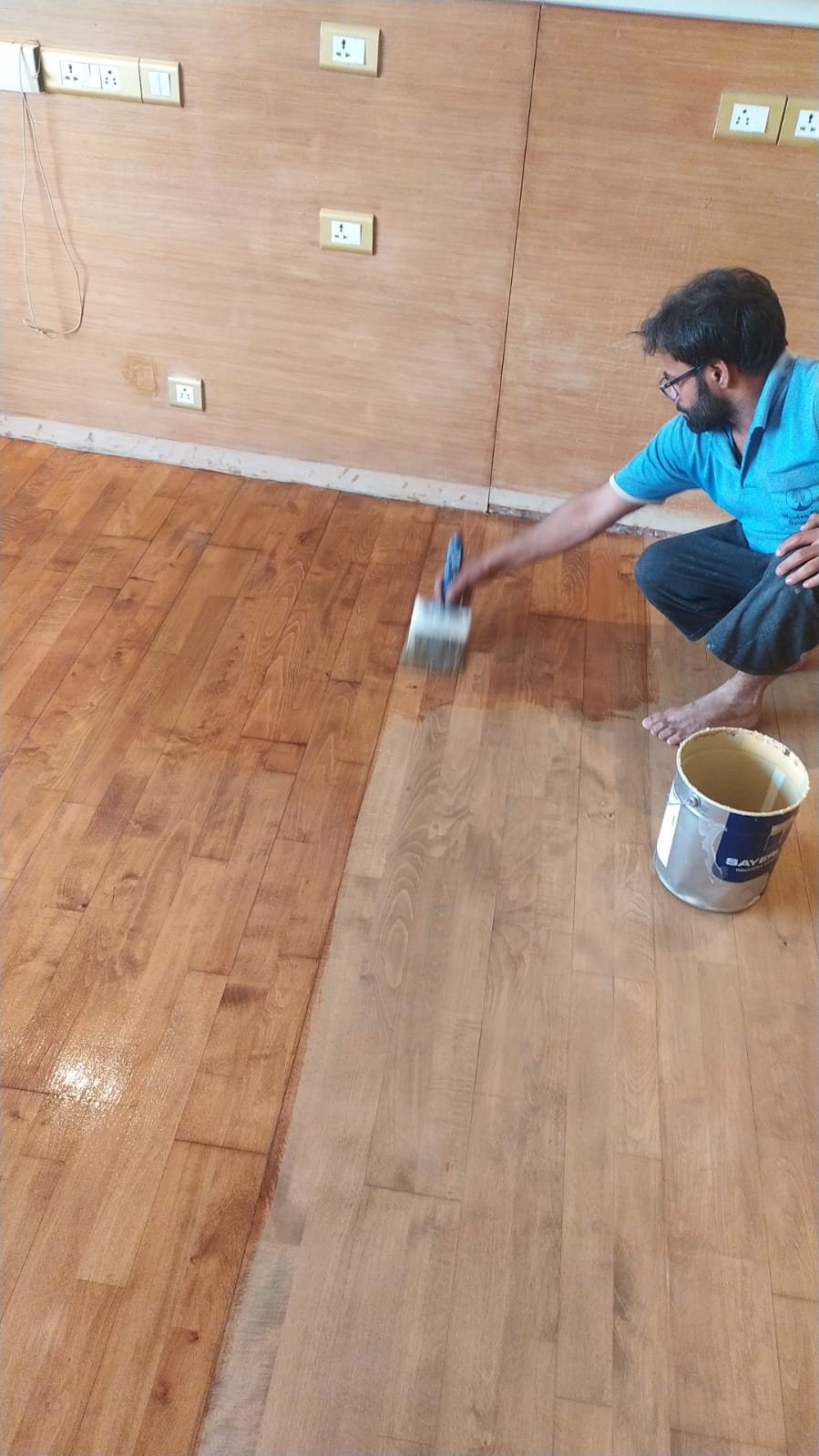
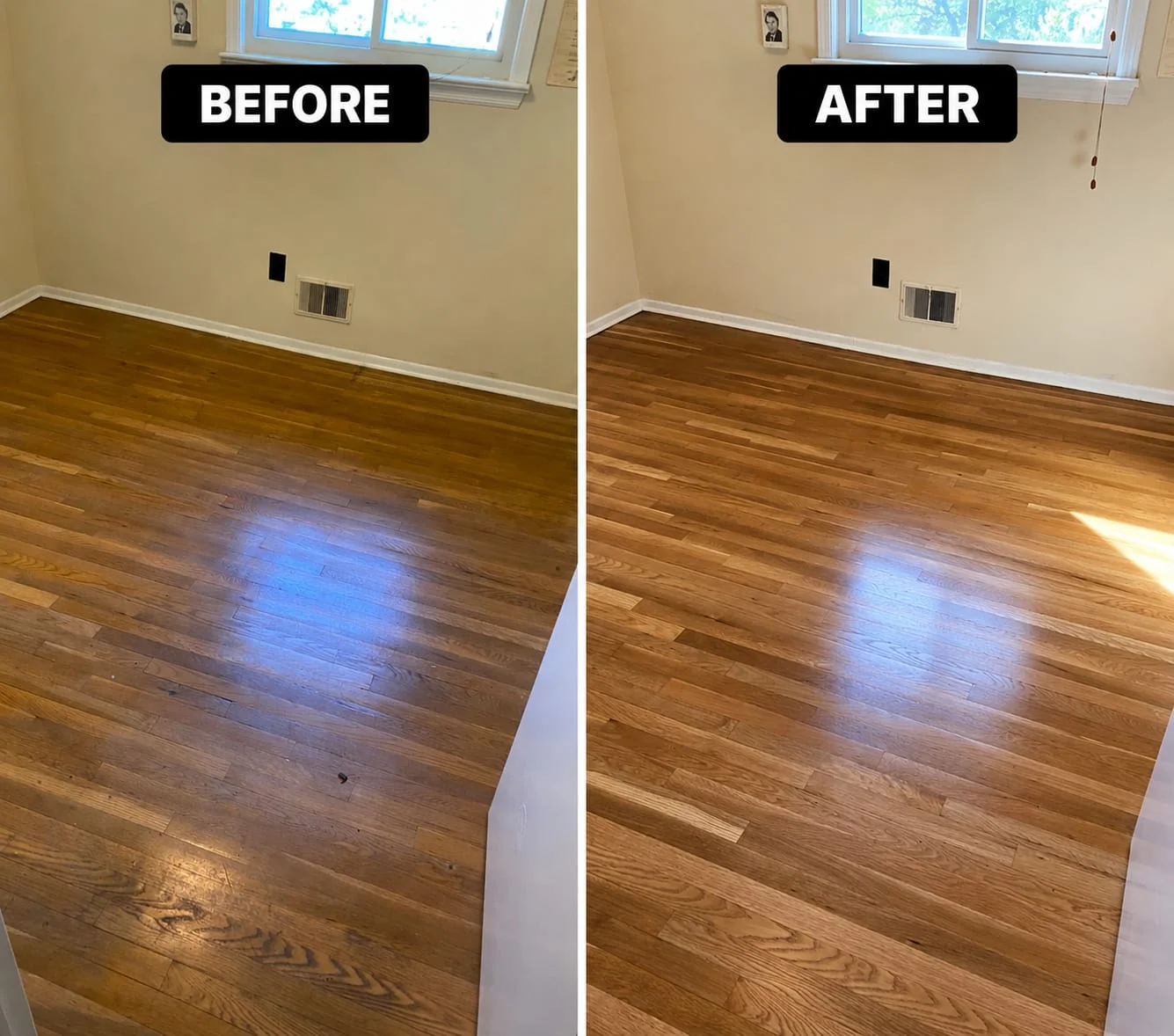
Screen & Re-Coat (Every 2–3 Years): If your floor has lost its sheen or developed fine surface scuffs, but the underlying color and wood grain are sound, a light abrasive mesh screen followed by 1–2 fresh coats of PU restores showroom depth without grinding away precious millimetres of original timber.
-
Complete Restoration (Every 8–12 Years): If you observe deep gouges, board cupping from previous water exposure, or bare spots where foot traffic has worn down to raw gray timber, a full HEPA dustless sand, seam-resin fill, and complete re-finishing is required.
A well-maintained hardwood floor does not just survive Delhi's harsh environmental shifts—it ages gracefully, building a richer, deeper patina over decades. With climate-conscious daily care and seasonal maintenance buffing, your Sunder Nagar residence will preserve the effortless warmth and architectural stature of natural timber for years to come.